
New Insights into Parkinson’s Disease
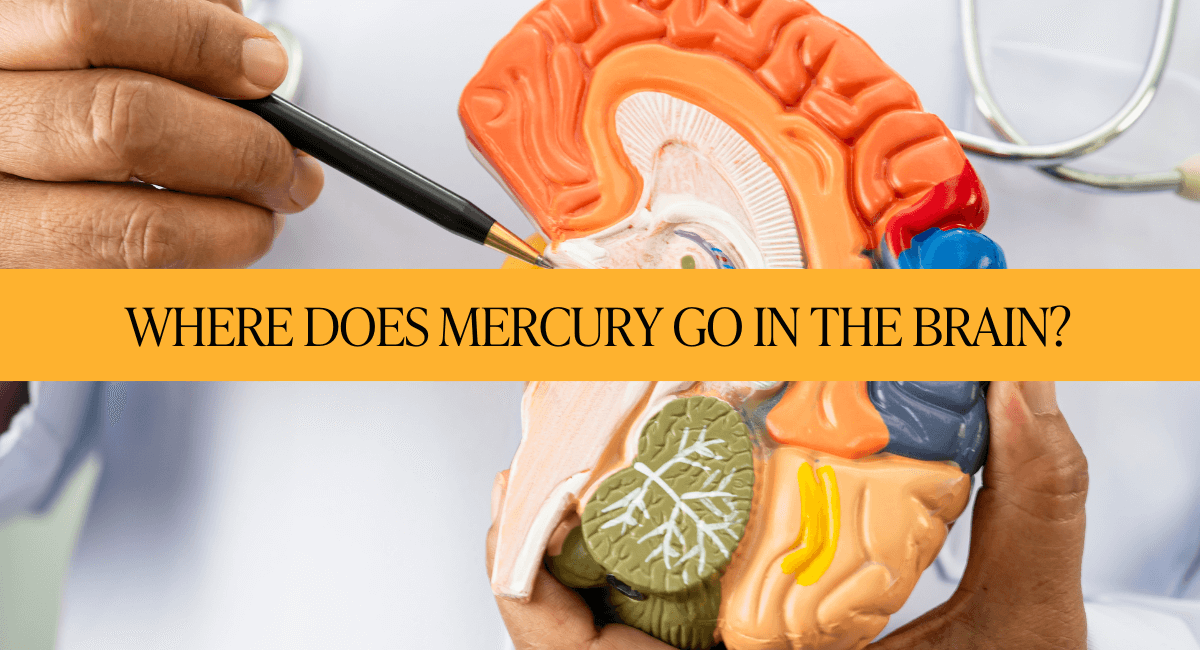
If you’ve been following research into Parkinson’s disease, you know that environmental toxins have long been suspected to play a role in this complex neurological condition. But what’s especially fascinating is not just whether you’re exposed to toxins like mercury, it’s where those toxins end up in your brain, and how that distribution may influence disease risk.
Recent discoveries suggest that mercury doesn’t just scatter randomly once it enters the brain. It seems to follow specific “routes,” targeting certain regions, and those patterns differ dramatically between people with Parkinson’s and those without it (Pamphlett & Bishop, 2022).
The Brain as a City — and Mercury as a Traveler
Think of your brain like a vast city made up of different neighborhoods. Some are bustling centers of activity; others are quiet residential blocks. When mercury enters this city, it doesn’t spread evenly. It seems to “prefer” certain destinations, and intriguingly, those destinations differ depending on whether someone has Parkinson’s disease.
In people with Parkinson’s, mercury tends to settle in the exact neighborhoods that the disease itself targets:
- the substantia nigra (where dopamine is produced),
- the motor cortex (which controls movement),
- the striatum, thalamus, and cerebellum.
Even more striking, mercury has been found right alongside the hallmark features of Parkinson’s, abnormal protein clumps called Lewy bodies and aggregated alpha-synuclein (Pamphlett & Bishop, 2022).
By contrast, in people without Parkinson’s, even those who’ve had measurable mercury exposure, the metal seems to take a different route. Instead of spreading through the dopamine-rich motor areas, it tends to concentrate in a small brainstem region called the locus ceruleus. This finding reminds us that exposure isn’t the whole story. It’s how each individual brain responds and adapts that makes the difference.
Why Some Brains Are More Vulnerable
So, why would mercury behave so differently in different people’s brains?
Scientists have proposed several overlapping explanations:
- Genetic susceptibility – Some people may carry genetic variations that alter how mercury is transported, stored, or detoxified within brain tissue (Ganguly et al., 2022).
- Blood–brain barrier permeability – The protective barrier surrounding the brain isn’t uniform. In some individuals, it may be more porous in dopamine-rich regions, allowing more mercury to enter (Ball et al., 2019).
- Cellular vulnerability – Dopaminergic neurons are naturally high-energy cells that generate substantial oxidative stress and contain high iron and neuromelanin levels, factors thought to increase their sensitivity to heavy metals (Pyatha et al., 2022).
- Inflammation and oxidative stress – Mercury amplifies oxidative stress, damaging mitochondria and proteins within neurons, processes already central to Parkinson’s progression (Torrey & Simmons, 2023).
Together, these insights form a picture of selective vulnerability: meaning that the difference isn’t simply how much mercury someone encounters, but where and how their brain stores it.
The Bigger Picture: Mercury and the Parkinson’s Puzzle
For decades, researchers have explored how our environment might influence Parkinson’s — from pesticides and solvents to air pollution and heavy metals. Mercury, in particular, has drawn attention because of its ability to cross the blood–brain barrier and disrupt cellular metabolism.
A 2022 review concluded that most studies assessing mercury exposure in patients with Parkinson’s disease have found a statistically significant association between the two (Torrey & Simmons, 2023). That doesn’t mean mercury causes Parkinson’s, but it strongly suggests it plays a role in disease susceptibility and symptom severity.
What’s compelling about newer research is its precision. Rather than simply measuring total mercury levels, scientists are now mapping where in the brain mercury accumulates. This helps explain why the disease primarily affects movement control, because the metal accumulates exactly in the regions responsible for those functions.
What This Means for Patients and Practitioners
1. Exposure alone doesn’t determine outcome
Two people could have identical mercury exposure. Yet one might develop Parkinson’s while the other remains unaffected. That difference may depend on genetics, detoxification capacity, or subtle differences in brain physiology. In other words, exposure sets the stage, but biology writes the script.
2. The “why” behind the symptoms
When mercury settles in the substantia nigra, dopamine production falters. When it accumulates in the cerebellum, balance and coordination are impaired. And when the motor cortex and thalamus are disrupted, slowness and rigidity appear. Understanding this distribution pattern helps explain why Parkinson’s manifests the way it does (Pamphlett & Bishop, 2022).
3. Hope for early detection and prevention
If future research identifies biomarkers that predict who’s most likely to accumulate mercury in vulnerable regions, clinicians could intervene earlier with lifestyle modifications, antioxidant support, or strategies that promote natural detoxification (Ganguly et al., 2022).
4. A reminder that brain health is systemic
Your brain doesn’t exist in isolation. Liver function, gut microbiome balance, nutrient sufficiency, and immune regulation all play a role in how the body handles toxins. Supporting these systems may indirectly protect the brain (Ball et al., 2019).
Looking Ahead: A More Holistic Understanding
Researchers are already exploring several promising directions:
- Advanced brain imaging: Techniques like mass spectrometry and synchrotron X-ray fluorescence are helping scientists visualize metal distribution in brain tissue, even at the cellular level.
- Gene-environment interactions: Studies are examining how certain gene variants (in metallothionein or glutathione pathways) influence metal accumulation risk (Ganguly et al., 2022).
- Mixed-metal exposure: Mercury rarely acts alone; it can interact with iron, aluminum, or nickel to amplify oxidative stress (Pyatha et al., 2022).
- Lifestyle interventions: Nutritional and metabolic approaches (such as ensuring adequate selenium, zinc, and antioxidants) may enhance resilience against environmental neurotoxins (Ball et al., 2019).
A Functional Perspective
As a clinician working at the intersection of psychiatry, neurology, and functional medicine, I find this research profoundly validating. It echoes a truth we’ve known for years: that chronic neurological conditions rarely have one single cause. They arise from a network of factors — genetic, environmental, metabolic, and emotional — that either protect or weaken the brain’s capacity to adapt.
Understanding how mercury and other toxins enter vulnerable regions provides us with one more piece of the puzzle. It enables us to have more compassionate and personalized conversations about risk, focusing on empowerment rather than fear.
If you or a loved one is living with Parkinson’s, or if you’re simply looking to support long-term brain health, consider the following steps:
- Eat a diverse, antioxidant-rich diet.
- Minimize consumption of high-mercury fish (like tuna, swordfish, or king mackerel).
- Choose smaller fish like anchovies, sardines, and mackerel, which are significantly lower in mercury.
- If you do eat a high-mercury fish (like swordfish), pair it with high-sulfur vegetables (such as broccoli, cauliflower, garlic, onions) and/or cilantro to help reduce mercury absorption. If appropriate, consider adding N-Acetylcysteine (NAC) with guidance from your clinician.
Support detox pathways with adequate hydration, movement, and sulfur-containing, liver-friendly foods.
Work with a clinician who understands both environmental medicine and neurology — someone who listens deeply and helps you connect the dots between symptoms, exposures, and resilience.
Closing Thoughts
The brain is resilient, beautifully so. But like any complex system, it needs protection. The emerging evidence around mercury’s selective accumulation reminds us that our environment matters, and so does our biology.
For patients, it’s a message of hope: you’re not powerless in the face of environmental toxins. For clinicians, it’s a call to look deeper… beyond symptoms, beyond exposures to understand why certain people are more susceptible and how we can strengthen their defenses.
Because the goal isn’t just to manage disease. It’s to restore the conditions for the brain to thrive.
References
- Ball N., Teo W., Chandra R., et al. (2019). Parkinson’s disease and the environment. Frontiers in Neurology, 10:218.
- Ganguly J., et al. (2022). Mercury and movement disorders: The toxic legacy continues. Canadian Journal of Neurological Sciences.
- Pamphlett R., & Bishop D. P. (2022). Mercury is present in neurons and oligodendrocytes in regions of the brain affected by Parkinson’s disease and co-localises with Lewy bodies. PLoS ONE, 17(1): e0262464.
- Pyatha S., et al. (2022). Heavy metals and Parkinson’s disease: Mechanisms of oxidative stress. Heliyon, 8(12): e11904.
- Torrey E. F., & Simmons W. (2023). Mercury and Parkinson’s disease: Promising leads, but research is needed. Parkinson’s Disease, 2023: 4709322.