
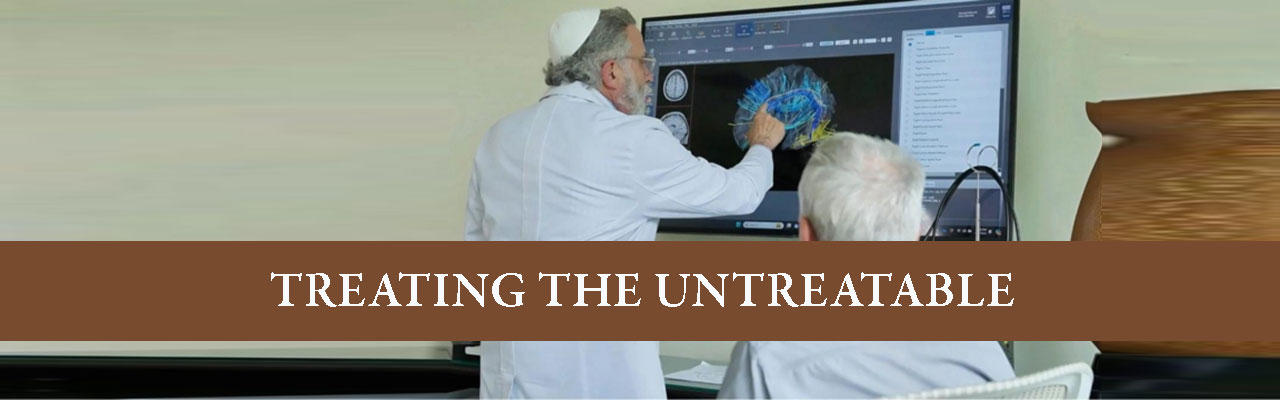
In four decades of clinical practice, the cases I remember most clearly are not the straightforward ones. They are the patients who arrived after being told that conventional medicine had exhausted its options for them.
Parkinson’s disease progressing despite medication adjustment. Aphasia following stroke, with communication not returning. Early dementia, managed but not addressed. Treatment-resistant depression persisting through multiple medication trials and years of therapy.
These are the cases that drove me to develop the HYLANE Program™ — and the outcomes in these cases are the reason I believe we are at a genuine frontier in neuropsychiatric care.
What HYLANE Is and Why It Works
The HYLANE Program™ is a proprietary multi-modal treatment system combining three leading-edge neurotherapeutic technologies — hyperbaric oxygen therapy, photobiomodulation laser therapy, and advanced neurofeedback — layered onto the comprehensive functional medicine foundation that has characterized my practice for decades.
Hyperbaric oxygen therapy delivers enhanced oxygen to brain tissue, improving neuroplasticity and reducing neuroinflammation. Photobiomodulation uses low-level laser therapy to stimulate mitochondrial function in brain cells and improve neural connectivity. Advanced neurofeedback, guided by quantitative EEG brain mapping, trains specific neural networks toward healthier patterns in real time.
Each of these modalities has its own evidence base. What makes HYLANE different is the integration — the strategic layering of these technologies onto a foundation that has already addressed the underlying biological factors affecting brain function. The combination produces outcomes that no single intervention achieves alone.
What the Outcomes Show
The results in conditions previously considered beyond the reach of intervention have been significant and documented.
In Parkinson’s disease, we have seen an 85%+ rate of meaningful symptom improvement. In aphasia following stroke, rapid communication recovery in 84% of cases. In early dementia, documented cognitive restoration and stabilization of decline. In treatment-resistant depression — which research increasingly recognizes as an early indicator of neurodegeneration in 30–40% of cases — we have seen recovery in patients who had not responded to multiple previous treatment approaches.
These are not anecdotal outcomes. They reflect the consistent application of a rigorous, data-driven protocol to conditions that conventional approaches had not resolved.
The Broader Implication
For families navigating a diagnosis that has not responded to conventional treatment, the most important thing I can offer is this: the absence of response to standard care is not the same as the absence of options. It is, in many cases, the indication that a different and more rigorous level of investigation and intervention is required.
The brain is not a static organ. It retains a capacity for healing, reorganization, and recovery that conventional medicine has historically underestimated. The work of the HYLANE Program™ is to create the precise conditions under which that capacity can be realized.
For the individuals and families who have been told there is nothing more to be done, we respectfully disagree.